
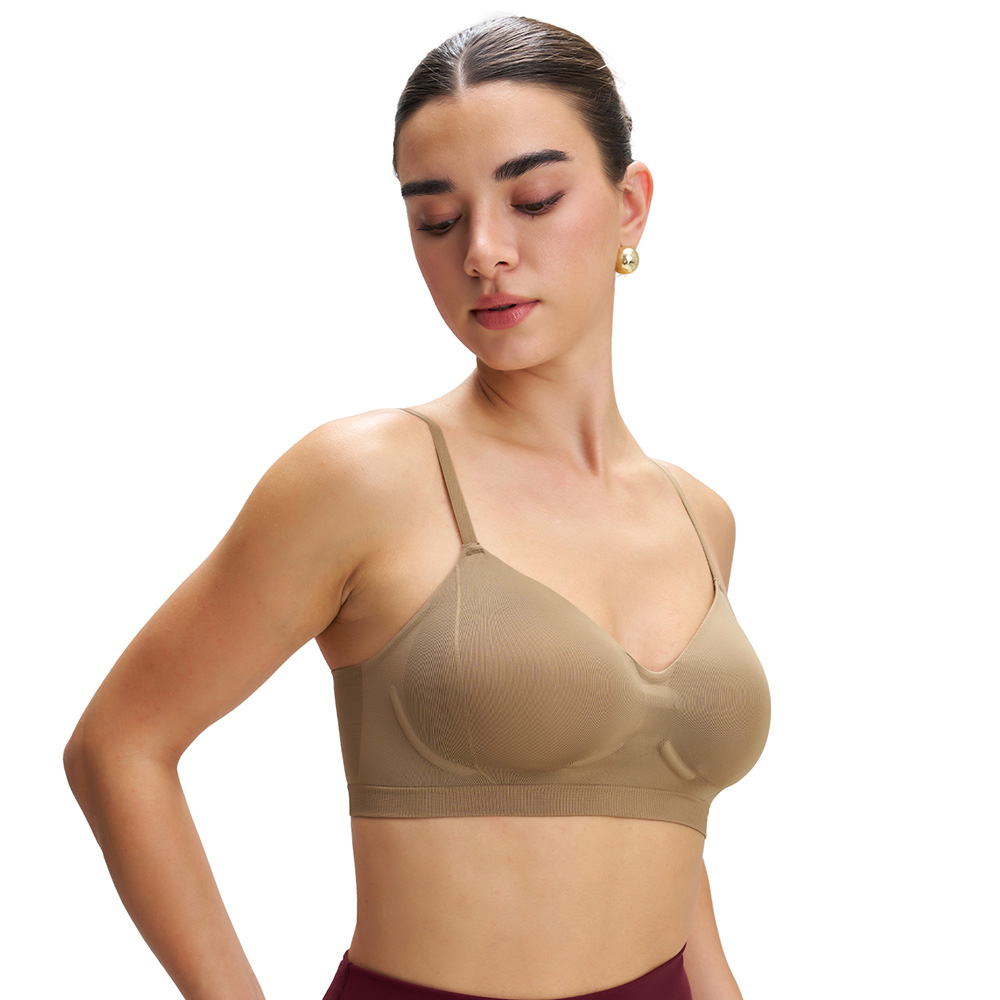
Apparel Material RFQs: Name Fabric and Padding
0616 catalogue appearance. The pictured bra does not reveal a verified fibre percentage or establish the padding’s complete construction.
For an apparel material RFQ, request the main fabric declaration separately from padding and other confirmed components. Gangsha’s 0589 Bra page describes Nylon 66 fabric, while its 0616 Bra page mentions Nylon 66 and Lycra fabric with silicone padding. The 0930 Cropped Yoga Leggings page says nylon fabric without the same grade wording. Keep these statements attached to their own styles and ask for the complete offered material record.
A buyer comparing wholesale bras with activewear can lose important distinctions by shortening every material field to nylon blend. Another mistake is treating a named padding material as though it were a fibre percentage in the garment fabric. A component-based response sheet keeps the supplier’s wording readable without inventing a composition from an incomplete catalogue description.
Preserve the style-specific source wording
Begin with the 0589 Bra listing and copy its Nylon 66 fabric description beside that style reference. Request confirmation for the version being quoted. The statement names a material description, but it does not give the complete fibre percentages or identify every component of the garment.
Use a separate row for the 0616 Bra. Its source wording adds Lycra and silicone padding. Retain both distinctions when requesting the supplier response. Do not silently make 0589 share those details simply because both items are listed under bras or look coordinated in the catalogue.
Style reference
Observed material wording
Response requested
0589 Bra
Nylon 66 fabric
Complete offered fabric declaration and component scope
0616 Bra
Nylon 66 and Lycra fabric; silicone padding
Fabric declaration and separate padding description
0930 Cropped Yoga Leggings
Nylon fabric
Actual offered material wording without borrowing another style’s grade
These are catalogue descriptions rather than independent verification results. Ask the supplier to identify the exact materials and percentages relevant to the offered fabric, and to name the component each statement covers. Keep any supporting information tied to that same style and sample version.
0589 is a different style from 0616. Coordinated lower clothing is presentation context, not a shared fabric declaration or confirmed supplied set.
Give fabric and padding different fields
For the 0616 enquiry, create one fabric row and one padding row. In the fabric row, request the supplier’s full composition statement for the specified part. In the padding row, request the offered component description and its identity in the sample. This avoids squeezing two different construction questions into a single percentage field.
Ask whether any additional material declaration applies to a separately identified lining, trim or other component. Keep these as questions until the supplier confirms their presence and scope. A front photograph is not a complete component breakdown and does not establish whether the padding is removable or supplied as a separate spare.
Style, colour and sample-version reference.
Named fabric component and its declared composition.
Separately described padding where applicable.
Other components confirmed by the supplier.
Supporting response linked to the offered version.
Clarify material names without filling in percentages
Where the catalogue uses Lycra, preserve that source wording and ask the supplier for the fibre name and percentage declaration it proposes for the actual fabric record. Do not choose a numerical blend or make a brand-authorisation statement from the product name alone. The written response should explain the offered composition in the supplier’s own confirmed specification.
Similarly, the 0930 leggings page does not use the same Nylon 66 wording as the two bra pages. Ask what applies to 0930 rather than transferring a grade description across the range. A material request becomes clearer when missing information remains an open question instead of an inherited value.
0930 leggings reference. The top, socks and footwear are styling context; their materials and visible marks do not describe the leggings’ composition.
Attach the response to the sample being reviewed
Request a material record naming the style, selected version and components covered. Attach it to the labeled sample reference. If different sizes or colours require a different construction, ask the supplier to identify that difference rather than allowing a single family-level statement to cover everything by default.
A useful message is: “Please confirm the fabric declaration for each named style, list any separately described padding, and identify the components covered by each statement. Please mark missing information and proposed substitutions separately.” This gives the supplier a practical response structure without presuming what a complete declaration will say.
Keep material identity separate from performance
Review the response for completeness: each statement should identify a style, a component and the offered version. Return questions against the affected row instead of asking for a general assurance that all materials are the same. Retain any accepted revision with the sample and quotation so the purchasing team can follow the change.
This record identifies what the supplier declares, rather than proving comfort, stretch, support, compression or care performance. If those outcomes matter to the order, define their separate information or evaluation requirements. Do not turn a material name or model photograph into a measured result.
Frequently asked questions
Does Nylon 66 mean a complete fabric percentage?
It is the source material wording on the selected bra pages. Request the complete offered fibre declaration for the named fabric component rather than assuming an unstated percentage.
Should silicone padding go in the fabric blend field?
Record it as a separately described component and ask for its scope. The 0616 page mentions padding, while the fabric description is a distinct part of the enquiry.
Can 0930 use the same declaration as the bras?
Ask for a style-specific response. Its observed page says nylon fabric without the same grade wording, so another item’s declaration should not be copied into its record.
How should these questions be submitted?
Send the three product references and component-based response sheet through the Gangsha contact page, identifying the sample version and unanswered fields.
Material DeclarationsRFQ PreparationApparel SourcingWholesale Buying